☰
Introduction
India’s tourism and hospitality industry is growing rapidly and is among the country’s largest employment generators. According to IBEF, the sector supported nearly 46.5 million jobs in 2024 and continues to expand with rising travel demand.
However, despite this growth, many graduates struggle to secure suitable roles. The reason is clear. What is taught in classrooms often does not match what the industry expects on the job. This mismatch has created a persistent employability gap.
The Employability Gap in Hospitality Education
The employability gap refers to the difference between academic knowledge and workplace readiness.
In hospitality and tourism, this gap exists mainly due to:
-Limited hands-on training
-Outdated or theory-heavy curriculum
-Lack of exposure to real service environments
-Weak communication and professional skills
As a result, graduates may hold degrees but lack the confidence and competence required in operational roles.
What Industry Data Clearly Shows
Industry data confirms this challenge:
-India’s hospitality sector will require around 3 million additional skilled professionals between 2025 and 2028 (Hotelier India).
-The demand-supply gap for skilled hospitality talent is estimated at 55–60% (Economic Times).
-Only 1% of youth interested in hospitality careers receive formal skill-based training (Spectra Hospitality).
These figures highlight a clear reality. Jobs are available, but skilled and job-ready talent is limited.
Why Industry-Linked Education Is the Solution
To address this gap, hospitality education is shifting from theory-centric models to industry-linked learning frameworks.
These models integrate:
-Classroom concepts
-Practical skill training
-Internships and on-the-job exposure
-Continuous mentoring and feedback
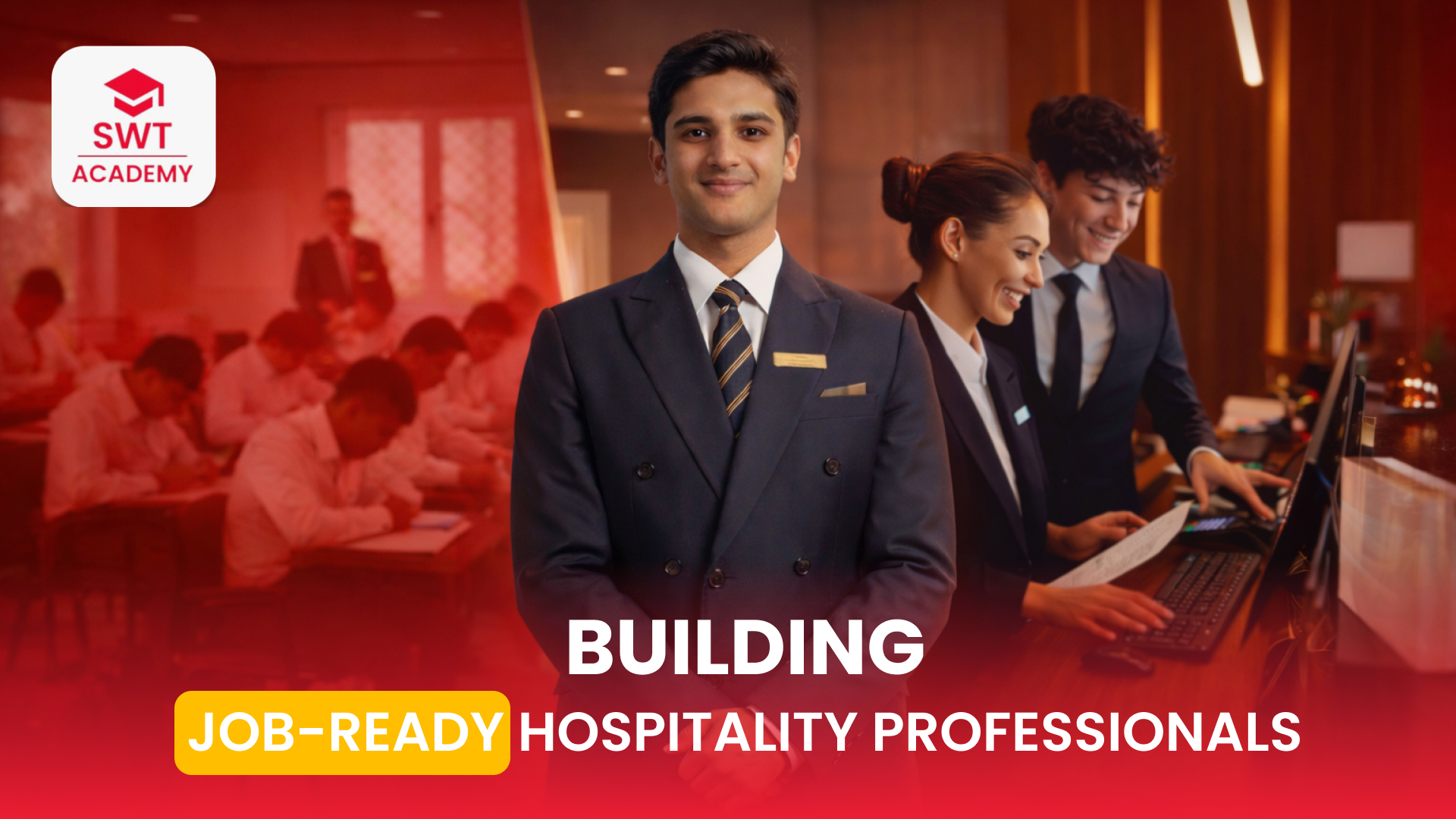
This approach ensures students understand not only what to do, but how to perform in real work environments.
How SWT Academy Bridges the Gap
SWT Academy focuses on employability-linked education in tourism and hospitality. Its programmes are designed to align learning outcomes with real industry requirements.
Key aspects include:
-Industry-aligned curriculum developed with sector professionals
-Practical skill development focused on real operational roles
-Short-term certification programmes for faster workforce entry
-Internship and placement support across hospitality and tourism sectors
-Collaboration with institutions such as TISS and government skill initiatives
This structure helps students transition smoothly from education to employment.
Learning Beyond the Classroom
Hospitality education is most effective when learning extends beyond textbooks.
Through field exposure, industry interaction, and guided mentoring, students develop:
-Customer handling and service skills
-Operational understanding
-Professional conduct and workplace discipline
These experiences build confidence and prepare students for real-world challenges.
Career Outcomes
Industry-linked hospitality education opens pathways to roles such as:
-Hotel Operations Executive
-Front Office and Guest Relations Associate
-Aviation Ground Staff and Customer Service Agent
-Food and Beverage Operations Executive
-Destination and Travel Operations Coordinator
These roles remain in demand across hotels, airports, travel companies, and tourism organisations.
Conclusion
As India’s hospitality and tourism sector continues to grow, the need for skilled and job-ready professionals will increase. Closing the employability gap requires education models that combine knowledge with practical application.
Industry-linked education ensures graduates are prepared for real roles, not just academic qualifications. Through its focus on practical training, industry collaboration, and career readiness, SWT Academy is contributing to the development of a workforce aligned with the needs of the hospitality and tourism industry.