☰
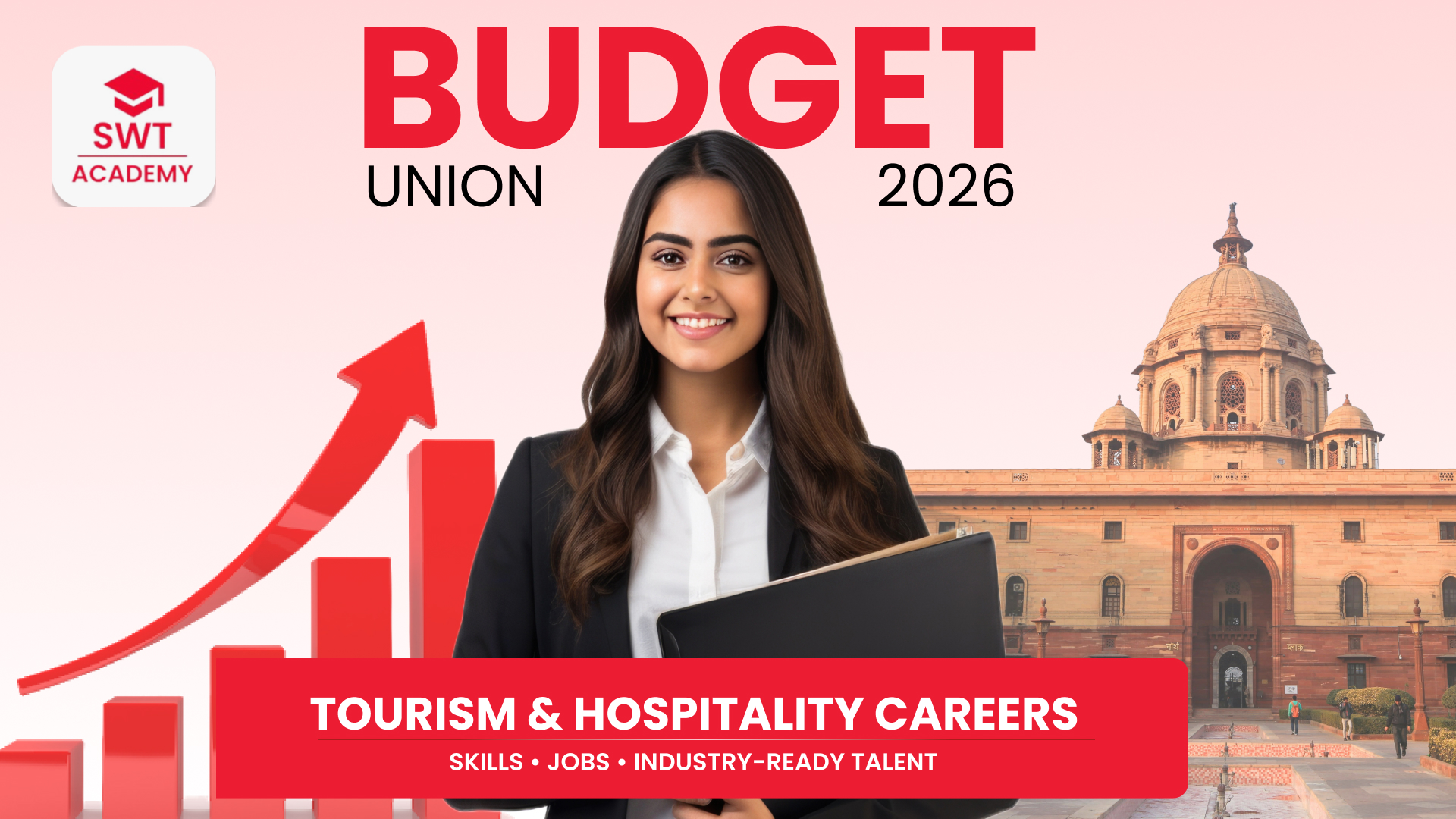
Tourism and hospitality play an important role in India’s economy. The sector creates employment across hotels, travel services, aviation, food and beverage, and destination management. As travel demand continues to grow, the need for trained and job-ready professionals is also increasing.
Recognising this potential, the Union Budget has placed special focus on tourism and hospitality. Finance Minister Nirmala Sitharaman highlighted tourism as a key driver of employment generation and economic growth. The Budget clearly signals that developing skills, improving institutions, and strengthening industry readiness are now national priorities.
Despite strong growth in the sector, many hospitality and tourism graduates still face difficulty finding suitable jobs. The main reason is the gap between education and actual industry requirements.
In many cases:
As a result, students hold qualifications but lack the confidence and practical ability required for frontline roles.
In the latest Union Budget, the government has clearly acknowledged that tourism can become a major source of employment, especially for young people.
Some key focus areas include:
The proposal to upgrade hospitality education institutions and improve structured training reflects the government’s intent to reduce the gap between education and industry needs.
The hospitality industry values practical ability more than academic knowledge alone. Employers expect candidates who understand service standards, workplace behaviour, and customer interaction from the first day.
Industry-linked education helps by:
This approach ensures that students are not only qualified, but also employable.
The government’s focus on tourism and skill development creates better opportunities for students and job seekers.
It can lead to:
With structured training and industry exposure, students are better prepared to meet workplace expectations.
With the right skills and training, hospitality and tourism graduates can explore roles such as:
These roles continue to grow as tourism expands across cities, regional destinations, and experience-based travel segments.
The Union Budget has positioned tourism and hospitality as key drivers of employment growth. Turning this vision into reality requires strong industry-linked skilling and practical training.
At SWT Academy, we actively support this mission by bridging the gap between education and employment. As an academic facilitator in collaboration with TISS, we focus on industry-aligned programmes, structured skill development, and on-the-job training (OJT) in Tourism and Hospitality. Our Bachelor’s programmes in Travel & Tourism and Hotel Management are designed to ensure students gain real-world exposure and workplace readiness.
By connecting students directly with industry opportunities, SWT Academy helps transform education into sustainable careers—contributing to a stronger, skilled workforce for India’s growing tourism economy.