☰
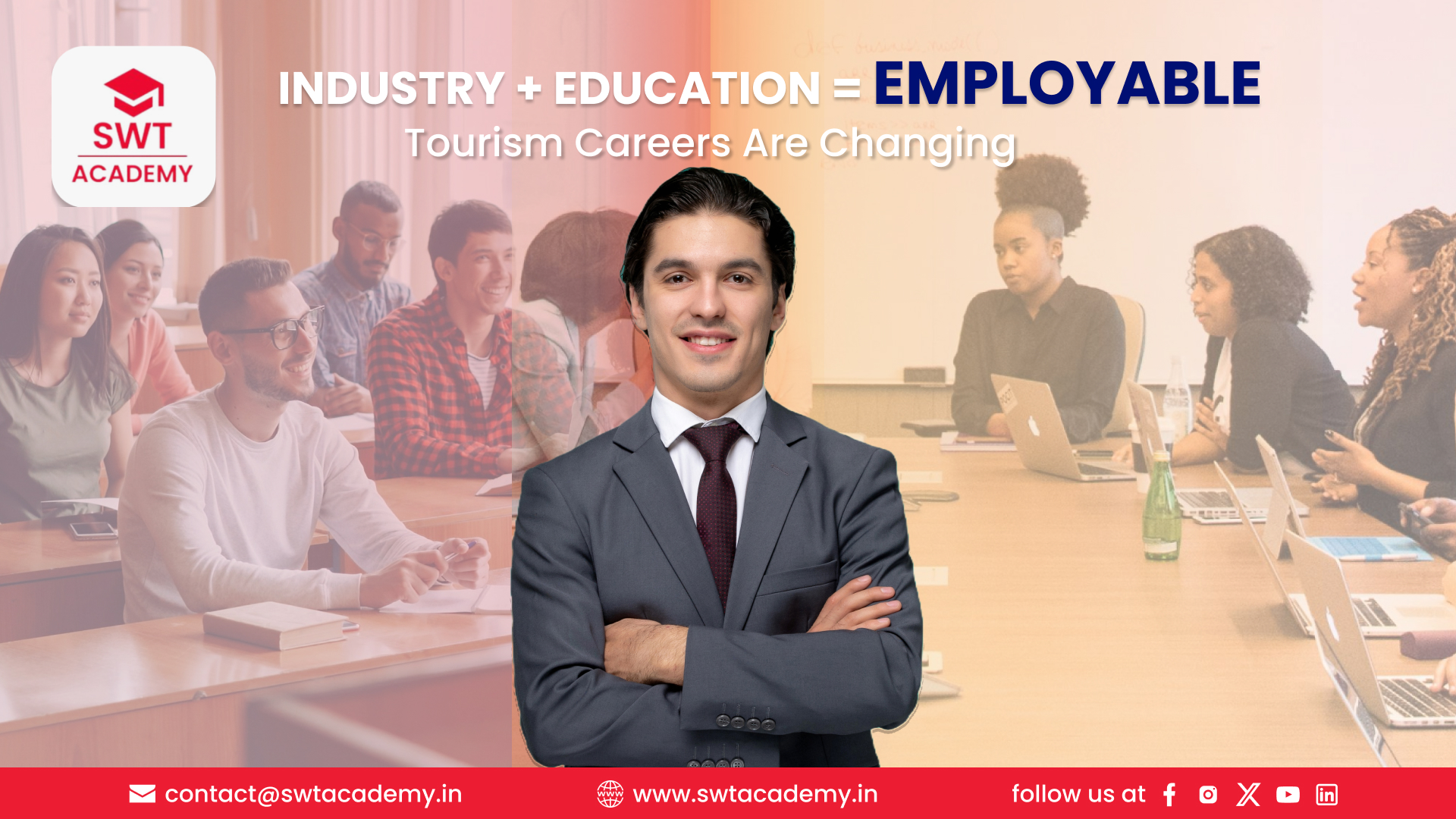
The tourism and hospitality sector is one of the largest employment generators globally. According to the 2023 Economic Impact Report published by the World Travel & Tourism Council (WTTC), the industry supported over 348 million jobs worldwide in 2023, accounting for approximately 1 in 10 jobs globally. The sector is projected to continue steady growth in the coming years.
However, global expansion has exposed a major structural concern — a widening skills gap.
The International Labour Organization (ILO), in its 2022–2023 global employment assessments, highlighted that while tourism-related employment opportunities are increasing, employers face persistent difficulty in recruiting candidates with:
This indicates that the challenge is not job creation alone — it is workforce preparation.
Traditional tourism education models often emphasize theoretical instruction while offering limited real-time industry exposure. As a result:
Academic–industry collaboration bridges this gap by aligning curriculum design and skill development directly with industry requirements.
The World Tourism Organization (UN Tourism), in its 2023 SDG Monitoring Report, formally integrated tourism employment indicators into Sustainable Development Goal (SDG) monitoring frameworks. This reflects a global policy shift — tourism success is now measured not only by revenue generation, but by:
These findings reinforce the urgency of developing education models that integrate classroom learning with live industry practice.
An effective academic–industry model in tourism education includes:
Course content developed with structured input from hotels, travel companies, aviation services, and destination management organizations.
Planned practical exposure in real work environments to build operational competence and confidence.
Evaluation systems extending beyond written examinations to include service quality, communication, problem-solving, and professional conduct.
Active institutional partnerships with industry stakeholders to ensure smoother school-to-work transitions.
Tourism is fundamentally service-driven. Customer experience determines brand reputation and repeat business. Without trained professionals, industry growth slows and service standards decline.
The future of tourism education depends on strong, structured academic–industry partnerships.
Global labor data from WTTC (2023), ILO (2022–2023), and UN Tourism (2023) clearly indicate that apprenticeship models, practical skilling frameworks, and employer-aligned curriculum design are essential for sustainable growth.
Academic–industry collaboration is not merely an enhancement in education delivery — it is a strategic necessity for building a skilled, confident, and employment-ready tourism workforce.