
☰
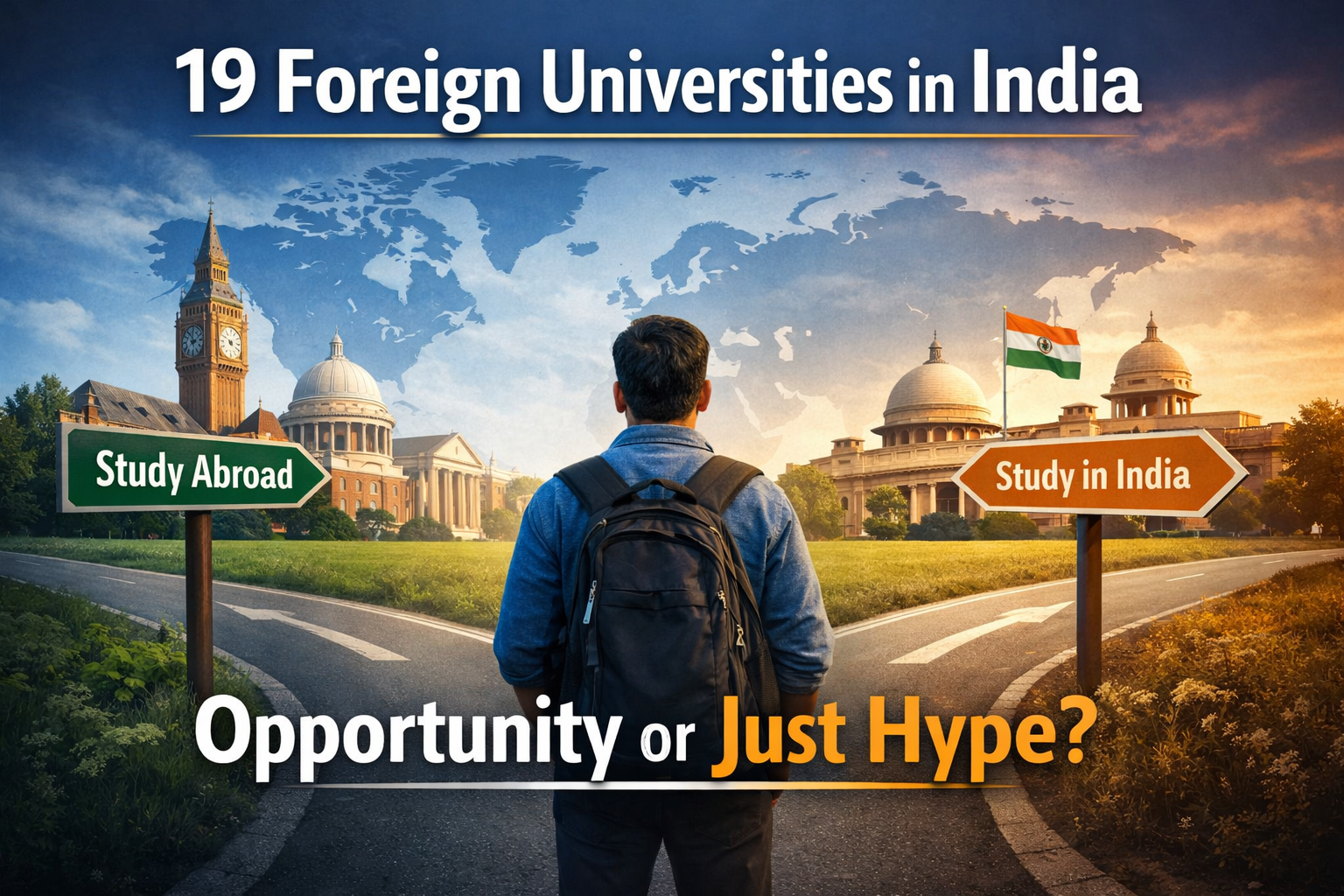
Imagine earning an international degree without leaving India.
India is now planning to allow 19 foreign universities to open campuses in the country. Many believe this could transform the higher education system.
But an important question remains:
Will this really benefit Indian students, or will it become an expensive option for only a few?
Every year, thousands of students from India choose to study in countries like the United Kingdom, Australia, and the United States.
The reasons are simple:
However, studying abroad also brings challenges:
High tuition fees
Expensive living costs
Currency exchange pressure
Visa uncertainty
Because of these challenges, having foreign universities in India seems like a promising solution.
However, studying abroad also brings challenges:
Because of these challenges, having foreign universities in India seems like a promising solution.
If universities like the University of Birmingham or the University of Melbourne open campuses in India, students may benefit from:
This could make global education more accessible for many students.
The Real Concern: Degree Value
Students care most about career opportunities.
For these campuses to succeed, they must provide:
Without these, the degree may not offer the same value as studying abroad.
For years, many talented students have left India for education and work abroad.
If foreign universities operate here, students could receive global-level education without leaving the country.
This could help:
The success of this reform will largely depend on cost.
If tuition fees remain close to international levels, these campuses may only be accessible to wealthy families.
To make this initiative meaningful, institutions must focus on:
A Chance to Improve Indian Universities
Foreign universities may also push Indian institutions to improve.
Competition could lead to better:
Over time, this could strengthen the entire higher education ecosystem.
Allowing foreign universities to operate in India is a bold step under the National Education Policy 2020.
But success will depend on quality, affordability, and career outcomes.
Because in the end, students are not investing in brand names.
They are investing in their future.