☰
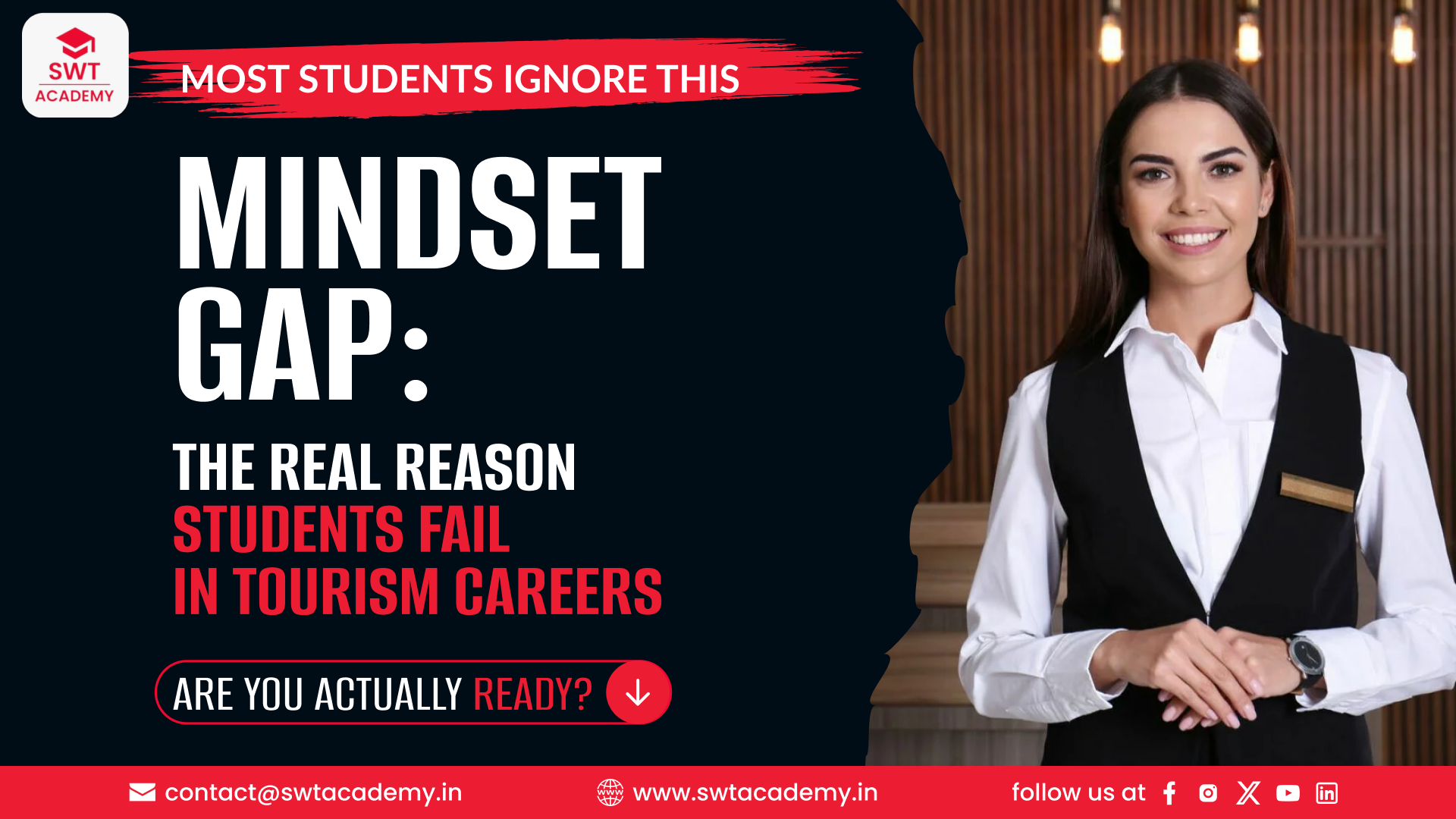
The tourism and hospitality industry in 2026 is growing rapidly, creating thousands of career opportunities every year. Yet, despite this growth, a large number of students struggle to sustain and grow in their careers.
While most people blame lack of skills or education, the real issue often lies deeper — the mindset gap.
Success in tourism is not just about what you know, but how you think, behave, and adapt in real-world situations.
The mindset gap refers to the difference between student expectations and industry reality.
Many students enter tourism and hospitality with assumptions like:
However, the actual industry demands:
This mismatch leads to frustration, poor performance, and early dropouts.
Technical skills can be taught in classrooms, but mindset is built through exposure and experience.
Here’s why mindset plays a critical role:
1. Handling Pressure and Long Hours
Tourism is a fast-paced industry. Professionals often work weekends, holidays, and extended hours. Without the right mindset, students quickly feel overwhelmed.
2. Starting from the Ground Level
Most careers begin with operational roles. Students who are not mentally prepared for this phase tend to lose motivation.
3. Dealing with People
From guests to team members, the industry revolves around human interaction. A positive and patient mindset is essential.
4. Continuous Learning
The industry evolves constantly. Those with a growth mindset adapt faster and stay relevant.
Based on industry observations, some common challenges include:
These factors directly impact employability and career growth.
Students can bridge this gap by focusing on:
• Building a Learning Attitude
Be open to new experiences, roles, and responsibilities.
• Embracing Entry-Level Opportunities
Every role is a stepping stone toward growth.
• Developing Emotional Resilience
Handling criticism and challenges is part of the journey.
• Improving Professional Behavior
Punctuality, communication, and discipline matter as much as technical skills.
• Focusing on Long-Term Growth
Success in tourism is gradual but rewarding.
Institutions today are recognizing the importance of mindset development alongside technical training.
Organizations like Tata Institute of Social Sciences emphasize:
Such approaches help students align their expectations with industry realities.
Bachelor in Hotel Management
A comprehensive 3-year program focusing on operations, guest handling, and real-time industry exposure.
Bachelor in Travel & Tourism
Designed to build communication, cultural awareness, and practical knowledge required in tourism careers.
In 2026, the biggest challenge in tourism careers is not the lack of opportunities — it is the mindset gap.
Students who develop the right attitude, stay patient, and embrace learning will always have an edge in this industry.
Tourism and hospitality are not just careers — they are long-term journeys that reward those who are prepared mentally as well as professionally.