
☰
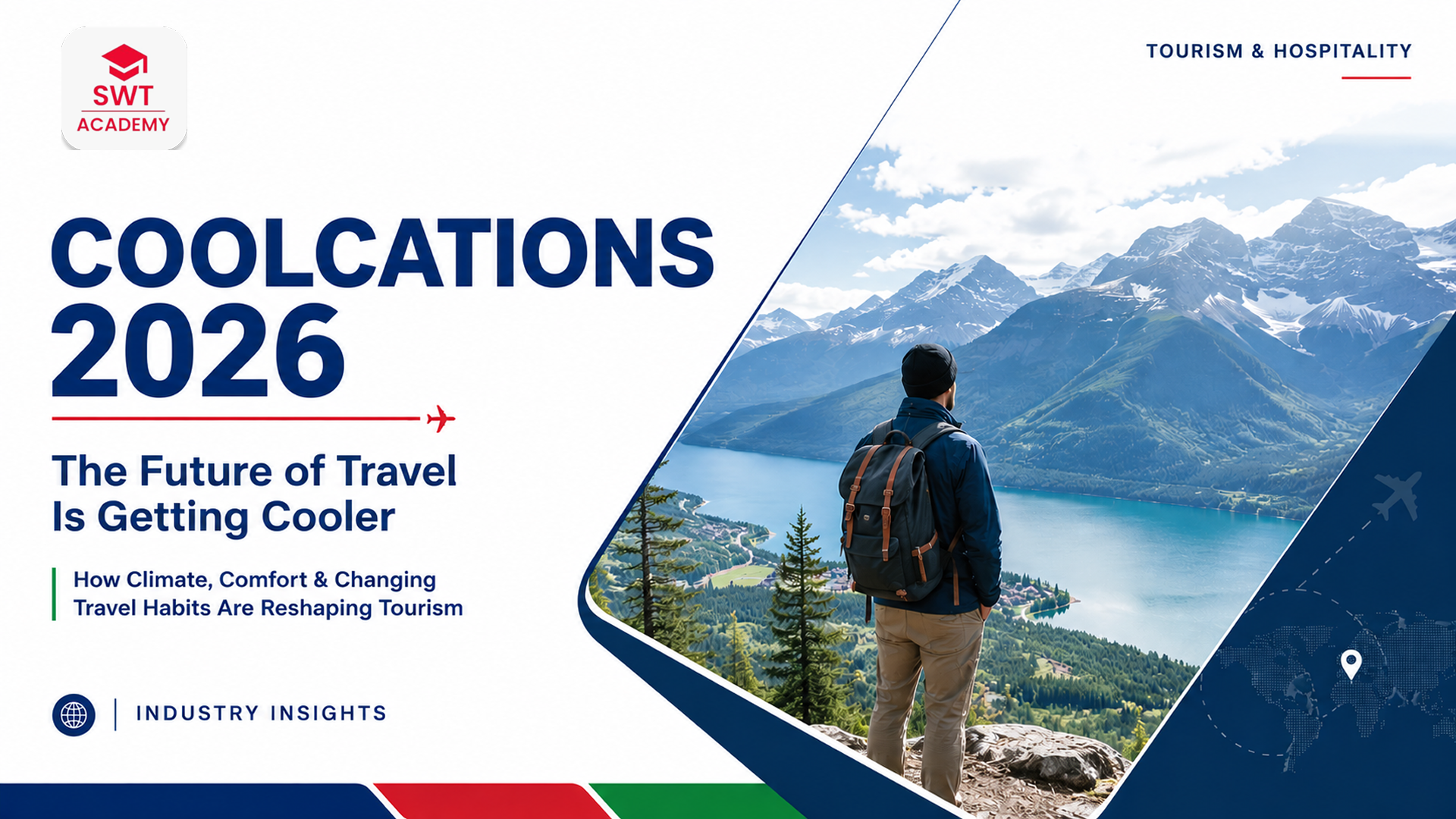
Tourism has always been influenced by seasons, weather, and destination preferences.
But in 2026, changing climate conditions are becoming a more visible factor in how travellers plan their holidays.
Instead of automatically choosing traditional summer destinations, many travellers are beginning to search for cooler locations, higher-altitude destinations, northern regions, mountain towns, and places offering more comfortable temperatures.
This growing travel behaviour is known as Coolcationing.
A coolcation is a holiday planned around cooler weather and comfortable temperatures rather than extreme summer heat.
The trend is gaining attention as travellers look for:
Recent 2026 travel reporting shows growing interest in cooler destinations as travellers respond to increasingly hot summers.
For tourism and hospitality professionals, this shift creates new opportunities to redesign destinations, packages, hotel experiences, and seasonal tourism strategies.
A coolcation combines the words “cool” and “vacation.”
It describes travel to destinations where travellers can escape extreme heat and enjoy more comfortable temperatures.
Instead of spending a summer holiday in a very hot city or beach destination, travellers may choose:
The concept is not simply about avoiding heat.
It is about creating a more comfortable and enjoyable travel experience.
Climate and weather are increasingly influencing travel decisions.
During periods of extreme heat, travellers may reconsider destinations where outdoor sightseeing becomes uncomfortable.
Cooler destinations can offer opportunities for:
Recent reporting has highlighted increased interest in northern and cooler European destinations during periods of extreme summer heat.
This suggests that weather may increasingly become part of destination-selection decisions.
Traditional summer tourism has often focused on hot beaches, Mediterranean destinations, and tropical holidays.
Coolcation travel is creating another possibility.
Travellers may increasingly explore:
Destinations that were once considered primarily seasonal or niche can potentially benefit from increased summer demand.
This can help tourism businesses diversify their traditional peak seasons.
Mountains have traditionally been associated with winter tourism, skiing, and snow-based activities.
Coolcation travel is creating opportunities to position mountain destinations as attractive summer tourism destinations as well.
Travellers can experience:
Higher-altitude destinations can provide cooler environments while offering a wide variety of experiences.
This creates opportunities for hotels, tour operators, guides, transport providers, and local businesses.
One of the biggest opportunities created by changing travel behaviour is the possibility of distributing tourism demand across different seasons.
Instead of destinations depending heavily on one short peak season, tourism businesses can create new experiences for travellers throughout the year.
For example:
This can help destinations develop more balanced tourism calendars.
For hospitality businesses, longer and more diversified seasons can create opportunities for better occupancy planning and revenue management.
Coolcation travellers are not only searching for lower temperatures.
They are often looking for experiences connected with nature.
These may include:
This connects coolcation travel with the growing demand for nature-based and experiential tourism.
Travellers increasingly want destinations where they can slow down, spend time outdoors, and enjoy a different pace of life.
Coolcation travel can also influence hotel operations and hospitality marketing.
Hotels in cooler destinations can promote experiences such as:
Rather than marketing only accommodation, hotels can package the complete destination experience.
This makes experience design an important skill for future hospitality professionals.
Traditionally, travellers considered factors such as:
Weather and climate are now becoming increasingly important considerations.
Travellers may ask:
Will the destination be comfortable when I visit?
This question can influence:
Travel advisors and tourism professionals therefore need stronger destination knowledge and the ability to understand seasonal travel patterns.
Technology is making travel planning increasingly flexible.
Travellers can use digital platforms to compare:
Travel businesses can also use customer data and digital tools to recommend destinations based on individual preferences.
For example, a traveller looking for a summer escape with mild temperatures could receive recommendations for mountain or northern destinations.
This creates opportunities for travel advisors to combine technology + destination expertise + personalisation.
The rise of coolcation travel can encourage tourism businesses to develop specialised products.
Examples include:
Travel companies can create packages around the complete experience instead of simply selling accommodation and transportation.
This makes creative itinerary planning increasingly valuable.
Luxury travellers are increasingly looking for comfort, privacy, and unique experiences.
Cooler destinations can offer all three.
Luxury tourism businesses can develop:
Luxury travel is therefore moving beyond traditional five-star hotels and beach resorts.
The new definition of luxury can also include space, comfort, privacy, nature, and personalised experiences.
Destination marketing organisations may need to rethink how they promote summer travel.
Instead of focusing only on beaches and sunshine, destinations can highlight:
Cool weather + nature + culture + adventure + wellness.
A destination that was previously considered a winter attraction could position itself as a summer escape.
This creates opportunities for destination managers and tourism marketers to develop new campaigns around changing traveller preferences.
Another important aspect of the coolcation trend is destination diversification.
Travellers may begin exploring destinations that were previously overlooked.
This can benefit:
Greater destination diversification can also help reduce pressure on highly crowded tourist hotspots.
For local communities, increased visitor interest can create opportunities for accommodation, food businesses, guides, transportation, and cultural experiences.
Changing travel behaviour creates new career opportunities across the tourism ecosystem.
Future professionals can explore roles such as:
The industry increasingly needs professionals who understand both traveller behaviour and destination development.
The tourism professional of the future will need more than basic destination knowledge.
Important skills include:
Professionals who understand changing traveller expectations will be better prepared to design relevant tourism products.
Tourism is a practical and constantly changing industry.
Students need opportunities to understand how tourism businesses operate through:
The Tourism & Hospitality programmes offered under Tata Institute of Social Sciences – School of Skill Education (TISS SSE), facilitated by SWT Academy, focus on practical and industry-oriented learning, helping students build skills relevant to the changing tourism and hospitality industry.
This industry-focused approach can prepare students for career opportunities across travel companies, hotels, airlines, events, destination management, tourism marketing, and hospitality businesses.
The rise of coolcations shows that tourism is changing with traveller needs.
People are becoming more conscious about:
The future of tourism will therefore be shaped by:
Climate Awareness + Technology + Experience + Flexibility + Personalisation
Tourism businesses that understand these changes can create better products and more relevant guest experiences.
Tourism in 2026 is not simply about choosing the most famous destination.
It is increasingly about choosing the right experience at the right time.
The rise of coolcations demonstrates how weather, comfort, technology, and changing traveller expectations can influence the future of tourism.
For students and aspiring tourism professionals, these changes represent exciting career opportunities.
The industry needs professionals who can research destinations, understand travellers, design creative itineraries, communicate effectively, use technology, and adapt to new tourism trends.
Through practical, industry-oriented Tourism & Hospitality education, students can develop the knowledge and skills required to participate in this evolving industry.
Because the future traveller may not always ask:
“Where is the hottest destination?”
They may increasingly ask:
“Where can I have the best experience without the heat?”