
☰
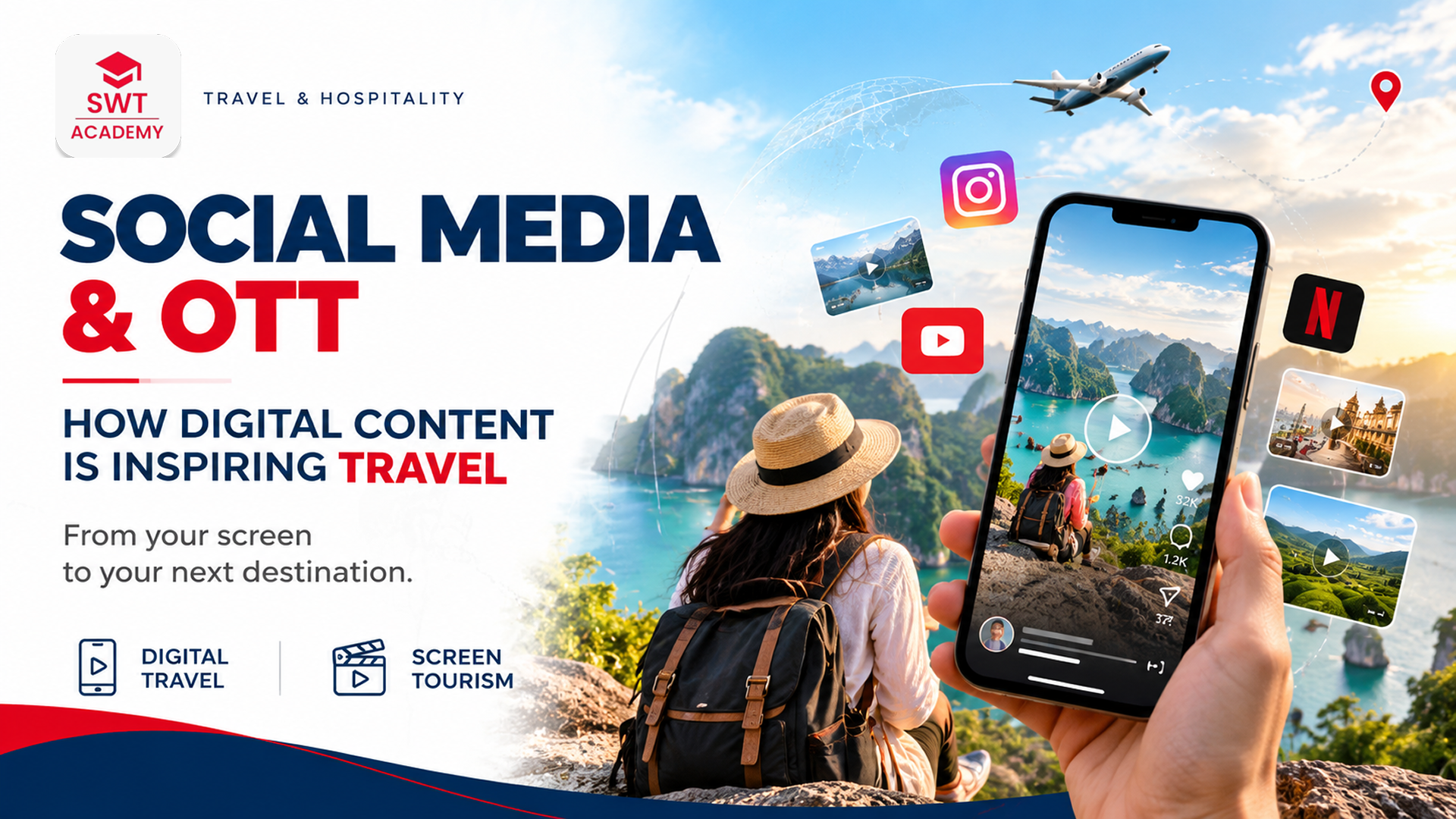
The way people discover travel destinations has changed significantly in the digital age.
Earlier, travellers relied mainly on travel guides, brochures, television programmes and recommendations from friends and family. Today, a single Instagram Reel, YouTube vlog or scene from a popular web series can inspire someone to plan their next holiday.
Social media and Over-the-Top (OTT) platforms have become powerful sources of travel inspiration. They influence where people want to go, what they want to experience and how they plan their journeys.
This growing connection between digital entertainment and travel is creating new opportunities for the tourism industry.
Social Media and OTT-Driven Tourism refers to the influence of online content, films, web series and digital communities on travellers' destination choices.
Social media platforms such as Instagram, YouTube and Facebook allow users to discover destinations through photographs, short videos, travel vlogs and personal recommendations.
OTT platforms such as Netflix and Amazon Prime Video introduce audiences to different destinations through films, documentaries and web series. When viewers become interested in visiting places featured in this content, it can contribute to screen tourism, also known as film-induced tourism.
For example, a traveller might discover a beautiful mountain village through a travel vlog or decide to visit a filming location after watching a favourite series.
In this way, digital content transforms ordinary viewing into a potential travel experience.
Instagram Reels and YouTube Shorts make destination discovery quick and engaging. A short video featuring a waterfall, mountain road, beach or heritage site can capture attention within seconds.
These videos often highlight the atmosphere and experiences of a destination, encouraging viewers to explore it themselves.
Travel vloggers share practical information about destinations, including accommodation, transportation, food, activities and approximate expenses.
This content can help potential visitors understand what a trip might involve and make more informed decisions.
However, travellers should compare multiple sources because individual experiences and promotional content may not reflect everyone's experience.
Films and web series can create emotional connections between viewers and destinations. Beautiful landscapes, historic streets and distinctive local cultures can become memorable parts of a story.
As a result, viewers may choose to visit these places to experience the locations they have seen on screen.
Travel influencers introduce their audiences to destinations, hotels, restaurants and activities. Their recommendations can increase awareness and influence travel decisions, particularly among younger audiences.
For tourism businesses, collaborations with relevant content creators can provide an opportunity to reach specific traveller groups.
Social media gives lesser-known destinations an opportunity to reach a wider audience without depending entirely on traditional advertising.
A small village, a local market or a remote natural attraction can gain attention through engaging content. This can encourage travellers to explore places beyond conventional tourist circuits.
Screen tourism occurs when people visit locations associated with films, television programmes or web series.
Travellers may explore filming locations, participate in guided tours or visit landmarks connected with their favourite stories.
This creates opportunities for destination marketing organisations, local guides, hotels and tour operators to develop specialised travel experiences.
Digital content also inspires people to discover destinations through local cuisine, traditional crafts, festivals and community experiences.
A food vlog may encourage someone to visit a city to try its famous street food, while a cultural documentary may inspire a journey to explore local traditions.
This strengthens the connection between digital inspiration, experiential tourism and cultural heritage tourism.
Many travellers save posts, videos and location recommendations before a trip. They can later use these saved places to create an itinerary.
Travel companies can respond to this trend by offering customised packages based on travellers' interests, preferred activities and budgets.
India has enormous potential for digital-content-driven tourism because of its diverse landscapes, cultural heritage, cuisine and film industry.
These destinations demonstrate how digital storytelling can introduce travellers to different aspects of India's tourism potential.
Social media and OTT-driven tourism can create opportunities for several tourism stakeholders.
Hotels and Resorts: Visual storytelling can showcase properties, facilities and guest experiences.
Travel Agencies and Tour Operators: Digital platforms can help promote customised itineraries, themed holidays and destination packages.
Local Businesses: Restaurants, homestays, artisans and guides can reach customers beyond their immediate communities.
Destination Marketing Organisations: Partnerships with content creators and production companies can increase destination awareness.
Local Communities: Increased interest in a destination can create employment and support local businesses when tourism is managed responsibly.
Despite its benefits, digital travel promotion also presents challenges.
When a destination becomes viral, visitor numbers may increase rapidly. This can cause overcrowding, traffic congestion, waste-management problems and pressure on natural and cultural resources.
Edited photographs and carefully selected videos may not show actual weather conditions, crowds, accessibility limitations or the full cost of visiting a destination.
Travellers may visit fragile natural areas or culturally sensitive locations without understanding local rules and traditions.
To address these challenges, content creators and tourism businesses should share accurate information and encourage respectful, responsible travel.
Artificial Intelligence is making it easier to turn online inspiration into practical travel plans.
Travellers can use AI tools to organise saved destinations, prepare day-by-day itineraries, estimate budgets and compare travel options.
For example, someone who discovers several attractions in Jaipur through Instagram can use an AI-powered travel planner to organise those locations into a convenient route.
Nevertheless, current prices, opening hours, transportation details and booking availability should always be verified before travelling.
The future of tourism marketing will increasingly combine digital storytelling, personal recommendations and technology.
Short-form videos, interactive destination content, creator partnerships and screen tourism can help destinations reach new audiences. At the same time, travellers will continue to need reliable information to turn inspiration into realistic plans.
Tourism businesses that combine engaging content with authentic experiences and responsible practices can build stronger connections with potential visitors.
Social media and OTT platforms have transformed the way people discover and experience travel. A photograph, video or film scene can introduce a destination to millions of viewers and inspire them to explore unfamiliar places.
For the tourism industry, this creates opportunities to connect entertainment, storytelling and destination marketing.
However, the true success of digital travel inspiration depends on more than online popularity. Destinations must offer meaningful experiences, protect their natural and cultural heritage, and provide visitors with accurate information.
📱🌍
In today's digital world, travel inspiration may begin on a screen, but the most meaningful memories are created in the real world.